our years is a long time in women's sport. While men's sport is ever evolving and growing, the speed of change in the women's game is much faster, as time lost when they were sidelined in professional sport at an increasingly rapid pace is made up.
The last time the Rugby League World Cup was held, the women's game was in a very different place. The NRLW contained just six teams, playing five rounds of competition, which was positioned almost as a sideshow to the men's finals. Since then, it has doubled in size to 12 teams and 11 rounds, getting genuine airtime across the Australian winter.
Women's State of Origin has also grown to a three-match series, attracting crowds of over 20,000 and broadcast reach of over two million viewers per match. While this growth certainly benefits Australia, it has also strengthened women's rugby league across the world.
Current NRLW players feature across the majority of teams in the 2026 World Cup – not just the Jillaroos. With double the number of players in the NRLW, it has not only provided opportunities for international players to take part, but also opened pathways for Australian players from different cultural backgrounds to represent the countries their parents and grandparents hail from. While this has long been common in men's rugby league, having more players in the NRLW provides more visibility for those players to be seen and recruited by overseas coaches for the World Cup.
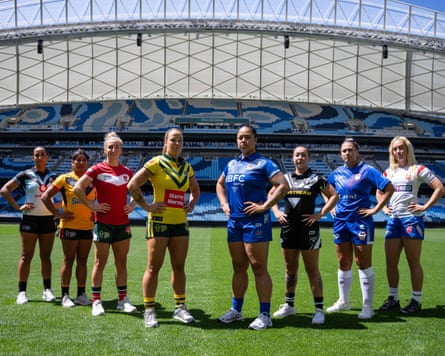
Although the Jillaroos remain favourites to back up their 2022 win, in which they defeated New Zealand 54-4 in the final, the gap is closing and this is shaping up to be the closest World Cup in history. Eight teams will compete for the title – five of those return from the 2022 iteration, Australia, New Zealand, England, Papua New Guinea and France. Fiji and Wales will make their first women's Rugby League World Cup appearances, while Samoa will compete for the first time since 2003.
Most likely to challenge the Jillaroos are New Zealand and England. The Kiwi Ferns boast a full squad of NRLW players, most notably Canberra Raiders and former Queensland Maroons halfback Zahara Temara and Sydney Roosters premiership-winning prop Otesa Pule. England have strong experience in the Super League, including nine players from the dominant Wigan Warriors. They are bolstered by the inclusion of a number of NRLW stars, with Roosters second rower Jasmin Strange certain to make a big impact.
Where the Jillaroos maintain a strong edge, though, is in the combinations they have across the team. Their squad features eight players from the Roosters – undefeated NRLW premiers in 2026 – and 13 players from the NSW Sky Blues, who won the 2026 State of Origin series in a 3-0 whitewash. Not only have these players trained and played in these combinations throughout the year, they are highly experienced at winning together. The importance of this critical mass of players coming from a strong winning culture cannot be underestimated. In high-pressure games, a team who expects to win and plays with that mindset is difficult to beat.
The Jillaroos squad also has plenty of depth, and coach Jess Skinner will have some tough decisions to make before selecting her team for the big games in this tournament. The most intriguing battle is between the two halfbacks in the squad – State of Origin-winning half Jesse Southwell and NRLW premiership-winning half Tarryn Aiken. Both are incredible talents with the ability to turn the game to their advantage. Aiken's more recent success gives her the edge – and she has been named at halfback for the opening match against Samoa – but expect Skinner to test both players throughout the tournament.
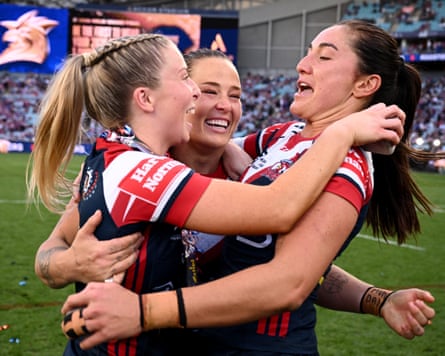
Roosters' and Sky Blues' five-eighth Jocelyn Kelleher has been named to make her Australian debut in the opener and is likely to hold down that spot throughout the tournament, after outstanding performances in the NRLW and State of Origin series. Her kicking game is a key strength the Jillaroos will be seeking to exploit – her pinpoint accuracy was on show in the NRLW grand final, as she troubled the opposition kick chasers and set up multiple tries for her team with her fifth tackle options. Also working in Kelleher's favour is her combination with both Aiken at the Roosters and Southwell in the Sky Blues' set up.
Possibly the most controversial selection call for the Jillaroos has already been made, with former captain Ali Brigginshaw missing out on selection in the squad. Brigginshaw retired from the NRLW after this year's grand final and, after missing out on a fairytale ending with the Brisbane Broncos, would have been hoping to end her career on a high with a World Cup win. But the selectors did not have the 36-year-old in their plans and she has been left to watch the tournament unfold from the stands, while Sky Blues' and Sydney Roosters' captain Isabelle Kelly takes the leadership reins.