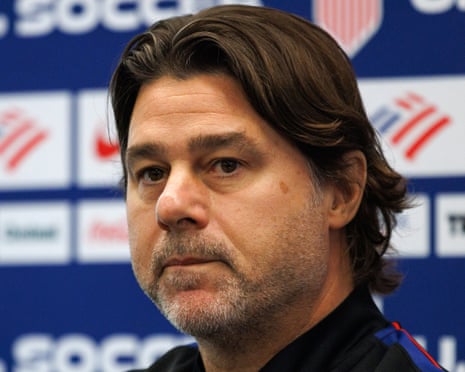
Every few months there is the report of a new "wonderkid" being signed: a South American full-back, a Scandinavian midfielder, a flying winger etc. But then they never seem to make the squad, let alone the first team. The same for our academy, which wins trophies regularly. Are there real prospects who could supplement or even improve the team? Is it too difficult to introduce them into Premier League games? Are they just investments for future sell-on? And why did JJ Gabriel leave?
The simple answer for many, and we can take the Paraguayan left-back Diego León as our example here, is that they are plainly not good enough and signing them has been poor . Some will take time, Sekou Kone was brought in from Mali and is out on loan at Lausanne to gain experience. Developing footballers is not an exact science and bringing them in from all around the world is a complex process to begin with. It is reliant on human factors outside football, of whether they can quickly adapt to life in a new country before even thinking about what they do on the pitch.
United's academy is successful and they bring through quality players, such as Kobbie Mainoo or Shea Lacey but it is more difficult to introduce them into a struggling environment than a successful one. Coaches always rely more heavily on experience in tough circumstances, leaving fewer opportunities for youngsters, further exacerbated by United's repeated failings in cup competitions, where many clubs blood their finest homegrown talents. At other clubs, there is always an eye on value of youngsters, and it makes them a lot of money but United have never thought like that, it is all about the first team, which is why they end up selling those that do not make the grade for cheaper. City are known for selling their unwanted teenagers for good prices, whereas United struggle in this department, losing them on the cheap.
In terms of JJ Gabriel, few inside United expected him to stay to sign a scholarship or professional terms. The plan from his side was always to move abroad and Real Madrid looks like his destination. United cannot be criticised, they did all they could to persuade him to stay but, ultimately, they were just a stepping stone in his journey.
CuriousOtter asks: Something I found strange with the team themselves was when they said they lacked in certain areas, in interviews. Calling out sporting directors for not investing in more players – isn't that calling out your teammates? If your centre-back says the team needs to buy a right-back, what does that communicate to the squad that's already there? Is this common across teams? Or is this coming up for United indicative that the players are as much part of the problem as the manager and higher-ups?
This is referring to Lisandro Martínez's comments where he took aim at director of football Jason Wilcox. The recruitment has been poor, no one can argue with that, leaving United short. Martínez has won a World Cup, he knows what is required to win at the elite level. The players will know that from experience where issues lie and they take the brunt of criticism, so Martínez was eager to make others be the focus of ire. Maybe he did not go the best way about it, using a post-match interview after losing to Atlético Madrid but if you are supposed to be at one of the best clubs in the world, then it should not be the case that a young centre-back is being played out of position in the Champions League because the hierarchy failed to buy a backup for an injury-prone left-back.
United spent £150m on central midfielders in the summer and it was an area everyone knew they wanted to invest in after Casemiro left but spending £50m on Andrey Santos to sit on the bench while there is no natural alternative left-back or striker, with Benjamin Sesko injured and Joshua Zirkzee barely trusted, it must grate on players who want to challenge for trophies. United are a club wanting to challenge in the Premier League and Europe but the squad is not deep enough to cope with a hectic schedule.
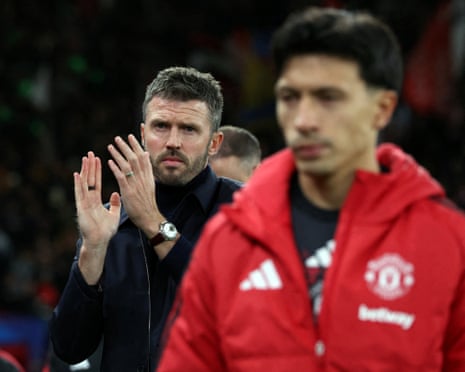
Diggedy asks: I know it is easy to blame the Glazers but over the last 10 years Man U is the third-highest spending club. How much is the actual players' fault rather than the club structure?
: There is plenty of blame to go round from the Glazers taking money out of the club to coaches not having the right tactics. It is bizarre that almost all of United's most expensive signings, , Jadon Sancho, Anthony and Ángel Di , to name a few, have all failed to live up to expectations, suggesting there is a wider problem. The recruitment has been dreadful for a long period of time, leaving the squad often unbalanced because too much money was spent in the wrong places. Players will always receive a lot of the blame, as witnessed recently when they were booed off after losing 3-0 to Bournemouth, while Carrick was cheered.
This team is clearly not performing to its maximum, that is for certain. Too many players have enjoyed the good life for too long at Old Trafford without performing. There is a certain pressure that comes with playing for United and many cope, but it weighs even heavier when they know they match expectations because there is a shortage of quality.
If we are being honest, this team should finish around sixth or seventh, so being 18th is an . Without for all involved, aiding their to third under Carrick. When things are going badly, however, few are willing to step up and take responsibility. Fernandes, Cunha and Maguire will but others like to go hiding, a matter Pochettino will need to change.
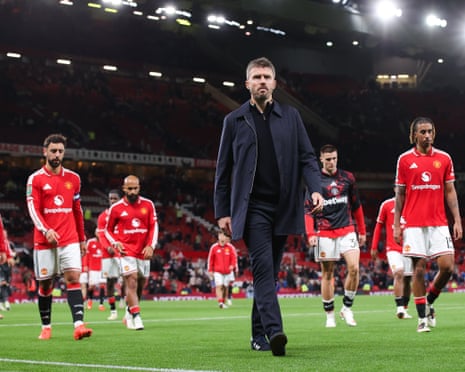
Chloe asks by email: Who should we expect to be key figures under Pochettino's new system? Which young players may be given a chance to shine, and which squad members may have their form revitalised?
Hi Chloe, If he is fit, Luke Shaw will become very important to Pochettino before he worked under the coach at Southampton earlier in his career, so will know the demands of the Argentinian.
Kobbie Mainoo in midfield will be integral to everything going forward because he is someone that should be at the club for the next decade and has the ability on the ball to utilise it how Pochettino likes in a progressive manner.
Naturally, Bruno Fernandes will be a focal point and considering Pochettino likes his No 10s to roam and create chaos where they think they can cause the most damage, it will be interesting to see how the skipper will perform the role. Fernandes criticised Carrick's tactics, implying he was not happy in general, so a new start for him under Pochettino could hail a return to form.
Shea Lacey's development as a winger will be intriguing because he has the capabilities to establish himself. Noah Ajayi from the academy is another who could quickly get on to Pochettino's radar.
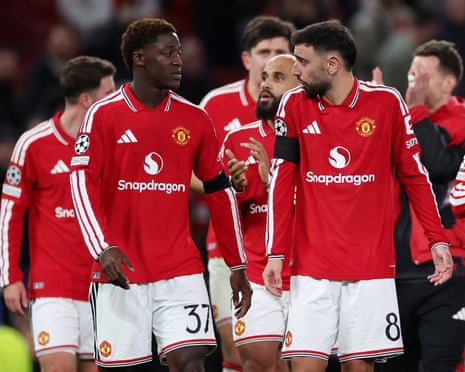
Patrick asks by email: Poch is associated with enthusiastic, young players, a high press and a mobile defence playing a high line. Given the lack of dynamism and quality in the current squad, what's his plan B going to look like?
: Hi Patrick, for starters, it should be said that Pochettino will be happy to delve into United's very successful academy to find young players with the right attitude and attributes, if the senior players are unable to perform the duties they want.
Under Michael Carrick, United showed they are often best playing on the counterattack and they have the players to do this but it is not the 'United way'. Pochettino has spoken of his love for Sir and will be desperately hoping that he can follow in his footsteps with attacking play, inspired by a relentless desire to win. He said on Thursday that he wants United to be "s" on the pitch, it feels as if he will try to honour Sir Alex's legacy. I suspect it could be a few months before we find out if there is a pragmatic plan B. If it was up to me, I would stick to playing on the counter but Pochettino is unlikely to listen to my views.
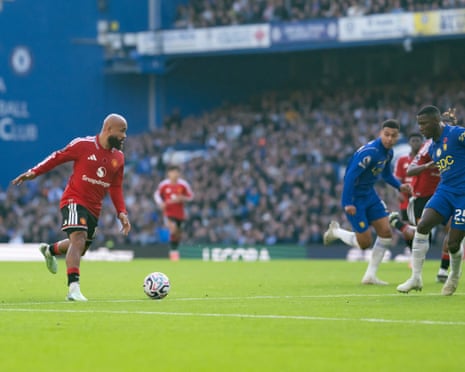
RobRoy1975 asks: Pochettino has, at best, a chequered track record … What exactly would he bring to United that Moyes, Van Gaal, Mourinho, Solskjær, Amorim and a host of interim managers didn't bring?
It is an intriguing one. I am not sure it is possible to pinpoint one individual trait that others did not have. He is very self-confident like Van Gaal, Mourinho and Amorim but that did not equal success. He has a clear philosophy that has been tested over the years but so did the others.
I think, at the moment, he was the strongest candidate based on his record in in particular and taking on a long-term project at Tottenham. If anything, maybe he has the political intellect to enjoy a good relationship with the players and the hierarchy. He has had to deal with Donald Trump after all.
PurvesGrundy asks: There is a strong case to be made that the last United coach who truly coped well with a "normal" season for a big club (ie two games a week, four competitions, no empty Covid stadiums) was José Mourinho. That's a long time. The club has changed dramatically, there's years of scar tissue and failure since then. Can anyone realistically expect Poch to be the first one to get it right?
LouisLou adds: Is the answer to the question of whether Pochettino will fix Man Utd just "depends how long he gets"? A string of people have gone through the doors now, any one of whom might have sorted things out, all sacked, some with less than a year in charge. What can anyone realistically do in that time unless they've been left with a squad in really good shape? What usually happens (with any half-decent manager) is there's some sort of bounce, some sort of lull after a bounce and then things start to pull together. So far, have Man Utd ever got past the lull phase without overreacting?
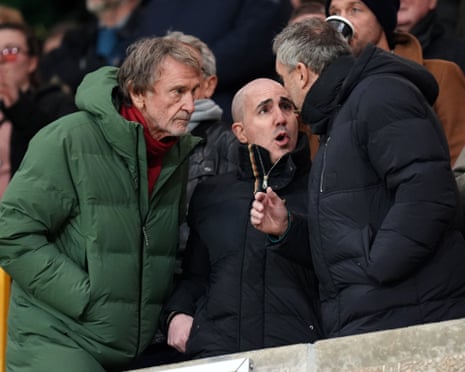
: A coach cannot cope with the supposed 'normality' of playing in the Champions League and Premier League, bringing two games a week, because the squad lacks the quality and depth to do so.
At this stage, you probably have to write off this season because it looks unlikely that anything can be achieved beyond steadying the ship. A lot of changes need to be made at United, they have started in the dugout but there is clearly a requirement to bring in new players and move on those that fall below the standard.
Elsewhere director of football Jason Wilcox and chief executive Omar Berrada are under intense scrutiny because they have failed to oversee any improvements during their tenure but retain the backing of Sir Jim Ratcliffe. Signings have been underwhelming for far too long and United consistently struggle to find value for money in the market, leaving the personnel available to a coach short of what is demanded by a club with such history. If Pochettino is unable to cope, then it will be further proof that the coach is not the problem.
Do you believe Poch is still an "elite" manager, as United fans seem to believe? His best work (at Spurs, under circumstances impossible to recreate at Old Trafford) was nearly a decade ago. He has drifted since.
: Hi Leroy, Obviously his finest work is still associated with those years at Tottenham but he has since worked at PSG and Chelsea with some incredible talents, and will have plenty from those environments even though the silverware was lacking. After a couple of years on the international beat with the USMNT, not to mention being 54 years 0ld, this is a pivotal moment in Pochettino's career, the final shot at a "big" job in the Premier League.
His tactics have slowly evolved over time, but there are negotiables, in terms of the high press and energetic style throughout his tenures at clubs. At United, there is a sense he will need to adapt because this team has been unsuccessful playing on the front foot and he will seek a balance, I suspect, to get the† best out of available to him. What Pochettino has – and will never leave him – is a strong personality, a no-nonsense attitude to discipline and someone who can cope with the pressure and the circus that comes with United, which could be his most important trait.
Will Unwin is online now answering all your Manchester United questions. It's not too late to get involved, ask yours here.
Manchester United have a new head coach. Mauricio Pochettino has signed a two-and-a-half-year deal to replace Michael Carrick, who was sacked after leading the club to their worst start to a season in four decades.
In a tearful farewell to the US men's national team, Pochettino called the move "one of the most difficult decisions" of his career. But the job he inherits may be harder still. No team in Europe's top five leagues has conceded more goals in all competitions this season. Bruno Fernandes has rejected a second offer of a new contract. And fans have turned their anger on the hierarchy above the dugout.
In his analysis of what the new head coach must do, Will Unwin wrote that whoever took over would have to find solutions on the pitch while putting pressure on those above him: "United fans know the person in the dugout cannot take all the blame and someone else has to be publicly accountable."
Pochettino's first game is at Liverpool on Sunday, then Sporting away in the Champions League. So is he the right man for the job? Can he get a tune out of this squad, and who will thrive under his high-intensity style? And will the club's owners give him the time and the tools he needs?
Will, who covers Manchester United for the Guardian, will be live here at 2pm GMT on Thursday 19 November to answer your questions.
Post your questions in the comments below or email conversations@theguardian.com