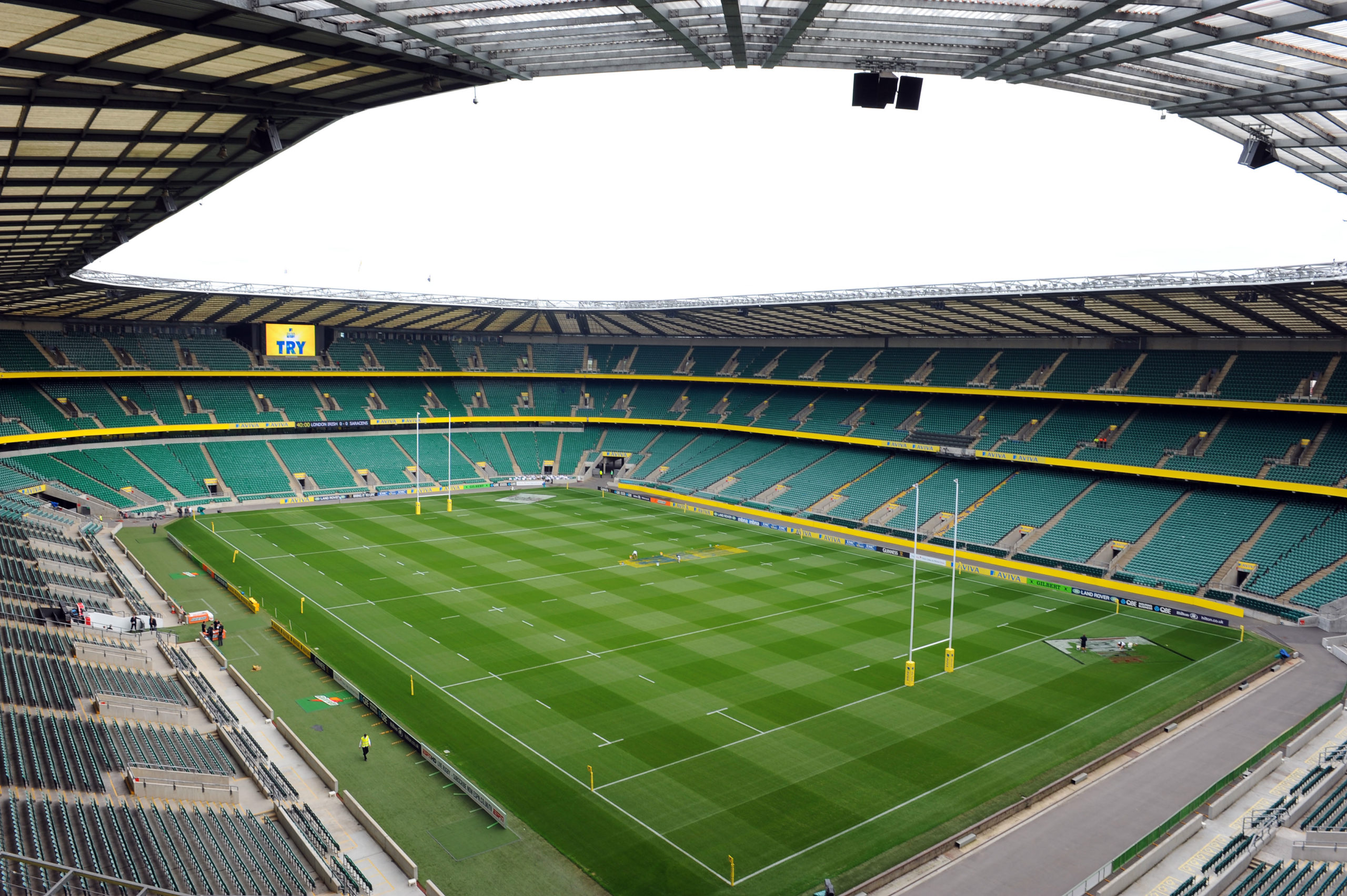
Sale Sharks spent part of their Premiership clash with Saracens playing with just 13 men. Jacques Vermeulen had received a 20-minute red card, Alex Lozowski was in the sin bin, and the hosts had a numerical advantage that should have been difficult to waste. Yet Sale emerged with a 21-17 victory.
A week earlier, Saracens had beaten Leicester Tigers 40-38 despite losing Nick Isiekwe to a 20-minute red.
Neither result proves that bookmakers misjudged the impact of those dismissals. What they demonstrate is that a red card no longer tells the whole story. For live betting markets, the timing of the decision, the player involved and the prospect of a replacement all complicate the calculation.
A Red Card No Longer Means 14 Men for the Rest of the Match
World Rugby made the 20-minute red-card replacement a permanent part of elite rugby’s laws in July 2026, following a global trial introduced the previous year.
The distinction is straightforward. A player receiving a qualifying 20-minute red card cannot return, but an eligible replacement may enter after 20 minutes of playing time. Intentional and highly dangerous offences can still attract a permanent red card, leaving the team a player short for the remainder of the match.
That creates two separate problems for the penalised side. First comes the immediate numerical disadvantage. Then comes the task of continuing without the dismissed player, even after the team returns to 15.
Losing a specialist tighthead prop presents different challenges from losing a winger or back-row forward. A replacement may restore the numbers without providing the same scrummaging strength, defensive organisation or attacking threat.
The consequences now depend on considerably more than the colour of the card.
The Prem Has Already Challenged Expectations
Saracens’ opening-round victory at Leicester provided an early example of how a match can change direction despite a sending-off.
Isiekwe was dismissed during the second half following a tackle on Freddie Steward. Leicester had already fought their way back into the contest, but Saracens responded to the setback by creating another try through Rotimi Segun.
The game took another turn when Leicester’s Tarek Haffar was shown a yellow card for repeated infringements. With both sides reduced to 14 players late on, Segun scored again to secure Saracens’ 40-38 victory.
Isiekwe’s red card was subsequently rescinded following a disciplinary hearing, although that decision came too late to influence events at Welford Road.
Sale’s victory at StoneX Stadium on 4 October was equally revealing.
Vermeulen received a 20-minute red card in the 18th minute following dangerous contact with Tomos Williams. With Lozowski already serving a yellow-card suspension, Sale briefly had only 13 players available.
Saracens appeared to have scored through Nick Tompkins, but the effort was disallowed following a TMO review. Sale survived sustained pressure and reached half-time ahead.
Second-half tries from Tom O’Flaherty and Ben Bamber helped establish a lead that Saracens could not overturn. Vermeulen subsequently received a four-match disciplinary suspension.
The two matches involved different circumstances and very different disciplinary outcomes. Both, however, illustrated how defensive organisation, territory and tactical decisions can outweigh the apparent advantage of an extra player.
They also highlight an important distinction for betting analysis: knowing who received a red card is not the same as understanding what happened during the resulting numerical disadvantage.
Why Timing Matters as Much as the Decision
A red card in the opening quarter creates a different problem from one issued with 10 minutes remaining.
An early dismissal requires a team to reorganise for a substantial period while anticipating the eventual return to 15 players. Coaches must decide whether to protect possession, kick for territory or continue attacking with fewer options across the field.
The team with the extra player faces decisions of its own. Numerical superiority offers the opportunity to create space, but converting that advantage into points depends on execution.
A side defending with 14 may compress its defensive line and force opponents towards areas where its remaining players are strongest. Alternatively, an exposed edge or weakened set-piece can create repeated scoring opportunities.
The position of the dismissed player matters particularly here. Losing a fly-half can disrupt decision-making and tactical kicking. Losing a front-row forward may create problems at scrum time, even if the team has enough cover to restore the numbers later.
A late dismissal is different again. When fewer than 20 minutes of playing time remain, the team cannot regain its full complement before the final whistle.
These distinctions make it difficult to assign one consistent points penalty to every red-card incident.
Handicaps, Total Points and Next-Try Markets React Differently
The impact of a dismissal is not necessarily the same across rugby betting markets.
For match-winner prices, the immediate questions concern the score, remaining time and likelihood of the penalised team recovering. A side leading by 15 points may still be well placed to win despite losing a player, while a team already trailing could find the situation considerably more damaging.
Handicap markets present another challenge. A red card might increase the expected winning margin for the opposition, but that adjustment depends on the teams’ strengths and the amount of playing time affected.
The assumption that a numerical advantage must produce more total points is less convincing.
A team protecting a lead could become more conservative after a dismissal, slowing its attack and relying on territorial kicking. Its opponents may dominate possession without turning that control into tries.
Next-try markets can respond more directly to immediate changes in territory and personnel. Even then, a side reduced to 14 can score against the run of play, as Saracens demonstrated at Leicester.
Player-specific markets add further complexity. The dismissal of a regular ball-carrier or key organiser can alter the distribution of attacking opportunities, even after a replacement arrives.
For bookmakers, the essential task is separating the temporary cost of playing a man short from the longer-term consequences of losing that particular player.
There is no established universal figure for how many points a 20-minute red card should cost. Any useful assessment must account for the circumstances rather than treating every dismissal as an identical event.
The Problem for Bookmakers Is Not Just the Red Card
The disciplinary process introduces another layer of uncertainty.
An incident may initially result in a yellow card while officials review the available footage. Where an off-field review upgrades the sanction, the eventual 20-minute replacement period is calculated from the original incident, not simply from the moment the upgraded decision is announced.
That sequence matters for live markets. Prices may need to reflect several changing possibilities before the final sanction is confirmed.
Bookmakers can suspend markets while important decisions are being reviewed, then reopen them with adjusted prices. However, the information available to a customer watching a broadcast may not arrive at the same time as the information received by the operator.
The UK Gambling Commission specifically warns that television and online streams can be delayed, potentially leaving viewers at an informational disadvantage when placing in-play bets.
Comparing prices across gambling brands also requires some care. The relationship between a brand and its operator, commonly examined in directories of UK casino sister sites, illustrates why different names do not always represent independent businesses. Shared ownership does not establish identical sports-betting prices, but it is a distinction worth recognising when comparing operators.
None of this establishes that bookmakers are consistently mispricing the 20-minute sanction. Demonstrating that would require recorded odds before and after dismissals, alongside enough comparable matches to distinguish a genuine pattern from individual results.
A Red Card Does Not Automatically Create Betting Value
The temptation after a dismissal is to assume that the market has overreacted, particularly when the penalised team has the option of restoring its numbers.
Yet a shorter numerical disadvantage does not guarantee a smaller effect on the final result. A side may lose a crucial attacking player, struggle at the set-piece or concede heavily during the 20-minute period.
Equally, a team with the extra player may fail to exploit the advantage.
An attractive price is only meaningful if the estimated probability of the outcome justifies it. A surprising result after a red card does not retrospectively prove that the available odds were wrong.
Live markets also encourage quick reactions to events that have not fully developed. The potential for information delays and rapid price changes makes restraint particularly important. Setting limits beforehand and following responsible gambling guidance remain relevant regardless of how favourable a situation appears on screen.
The Verdict: A Red Card Is No Longer One Simple Variable
The opening fortnight of the Prem has demonstrated how much rugby can happen after a sending-off without producing the result that numerical superiority might suggest.
The 20-minute replacement rule has changed the balance between punishment and competitive opportunity, but it has not made dismissals predictable.
For bookmakers, the challenge is now more detailed: identify the player lost, assess the temporary disadvantage, account for the replacement and consider how both teams respond.
Sale and Saracens have already shown why those distinctions matter. Whether betting markets consistently get them wrong remains a separate question, and one that requires considerably more evidence than two extraordinary matches.
