ngland players would have been well advised to ignore the advert outside their North Bay hotel in Wollongong over the weekend: "Everything that truly matters is possible," it read. Not quite everything, it turns out. While England women packed their cases and headed out of Australia the morning after their World Cup campaign was ended by slick Samoa, England men are still stuck outside a party they've been told to leave. Having watched their fate sealed during the Tonga v Samoa game on Sunday, England have moved to Sydney but some players will not arrive home until Friday, a week after their World Cup ended.
It could have been worse. They have been staying overlooking Wollongong's wonderful beaches, where the distinctly salty smell of seaweed drifts in with the mist off the bay. The surfers among the squad could take a hundred steps from their bedroom and be in the water, and the players whose families are in town have been able to start their end-of-season holidays early. When Wigan teammates Junior Nsemba and Zach Eckersley reminisce about their trip to the World Cup, they may well talk about spending the afternoon riding e-scooters up and down Cliff Road or strolling along North Beach rather than playing against Tonga, France and Papua New Guinea. With the beaches, cafes and stunning lilac jacaranda trees on every street, there are worse places for dreams to end. But most England players and staff are just desperate to get home.
As the Lifesavers Club outside buzzed with hundreds of kids, England winger Matty Ashton was sat in reception messaging home. He was free to visit the friends he made when he spent a prolific try-scoring 2019 season with Mullumbimby Giants in the Country Rugby League before a trial at Swinton Lions launched his career. Hooker Jez Litten didn't have time to feel sorry for himself for long. The morning after Papua New Guinea wrecked England's hopes, he was pushing a pram past WIN Stadium with his family.
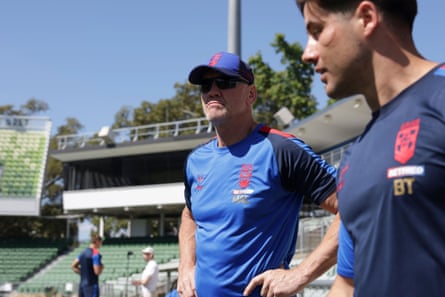
Most World Cups last five or six weeks for England. This one was over within 13 days for Brian McDermott's men. Still, by the time the last England players get home they will have been away a month. The much-criticised lack of preparation time could now be a blessing: at least they didn't spend the fortnight before that in training camp. England seconded the vastly experienced Steve McCormack from Rugby League Cares as wellbeing manager for the men's and women's teams; Francis Stephenson is doing the same role for the wheelchair team. Their duty is to support players and staff and keep a close eye on those wobbling emotionally. Having coached Scotland at three vastly different World Cups, overseeing historic achievements, unexpected glory and chaotic humiliation, McCormack knows what to look out for. For example, he insisted Brad O'Neill was on the first available flight home as his partner is due to give birth. McCormack himself expects to be last to leave.
At home World Cups, players can go home on their days off to see family and sleep in their own beds. During the 2013 tournament in England, one of Scotland's part-time players even did a day's work repairing a fireplace, while the NRL players travelled north of the border to visit family and trace their ancestral roots. In 2017, Scotland spent as much time travelling as training, with disastrous consequences, two players sent home in disgrace having got so drunk after the thrashing by New Zealand that they were denied entry to the plane.
Having been capped 43 times, there are few players better qualified to talk about touring than Keith Senior, the head of wellbeing programmes at Rugby League Cares. "When you're away from home you miss your family and all the other different elements," says the former Leeds Rhinos star, now 49. "But sometimes it comes down to how things are going on the pitch. On tour with Great Britain we often didn't perform as well as we could have, which adds to the problem and you tend to view things to be a bit worse than they are."
All reports suggest McDermott ran a happy camp and remained upbeat after the early elimination. "It's been hugely enjoyable working with a group of men completely focused. Everything is new. When the UK boys landed in Perth, we started talking like we didn't know each other. I've only worked with a couple of players in the past and I'm new to all the staff."
Bonding players who were trying to smash each other a few days before the England squad finally got together has always been a challenge. But players and staff alike believe McDermott managed it. "The NRL players joining with the Super League players has been so easy," said McDermott. "I thought it was something I was going to need to address, but some of the senior players have been great. We've made massive strides in a short period. There's loads to be pleased with."
McDermott's group were drawn from two competitions rather than two clubs, as was the case two decades ago. "There were six or seven players from Leeds and the same from Saints, and a lot was made of that, but there was never any hatred or disagreements with each other," says Senior. "We just stuck with who we knew. The media made it an angle, a reason why we were not playing well. We just hung about with people we knew and liked, who you spent six days a week with. There was no nastiness."
As Fleetwood Mac sang so sagely, players only love you when they're playing. So McCormack has paid particular attention to the players who McDermott rarely let shine. Injury restricted Morgan Knowles to 52 minutes of action, Jack Welsby played just 19 minutes, Ben Currie only 13. Ben Talty remains uncapped after the whole tournament while Kallum Watkins, who wasn't even in the squad when the tournament started, got on for his 15th World Cup appearance at his fourth event.
"It's a squad – if you're not picked it's frustrating but you've still got to be an asset to the team," says Senior. "Rob Burrow went on tour and never played a lot. But he was in the right mindset, put his best personality forward and did the right things for the team. That can be hard at times because you're there to play rugby."
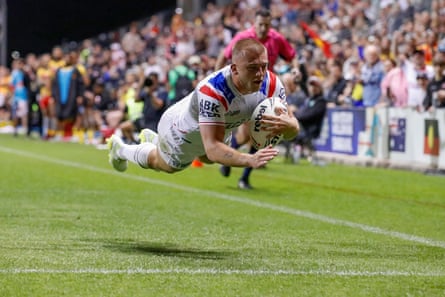
Mikey Lewis knew how that felt. Substitute last Friday, he tried sitting still on the bench but just couldn't. Perhaps feeling the need to touch grass, he stretched his back on the touchline, increasingly twitchy at being unable to contribute, glancing pleadingly at the coaches. As England's lead shrank to 12 points he asked for a thigh massage, then juggled the ball down the touchline like a coiled spring. He finally doubled his World Cup playing time when he got on for the last 22 minutes, albeit at hooker. When he dived over for a consolation try after the hooter, he leapt up, desperate to go again. It's over Mikey, it's over. Time to go for a swim in the Tasman.