Getting itchy feet isn’t the sole preserve of soon-to-be spouses feeling the walls closing in. It’s a fact of life in the workplace too.
We’ve all been in jobs where the sole reason we keep turning up is the lump sum deposited into our bank accounts each month.
Sometimes that isn’t enough. A gnawing sense of futility becomes impossible to ignore: is this it?
Personal ambition, whether misguided or not, can drive this. But also disillusionment at seeing your employers make a wrong turn and feeling powerless to do much about it.
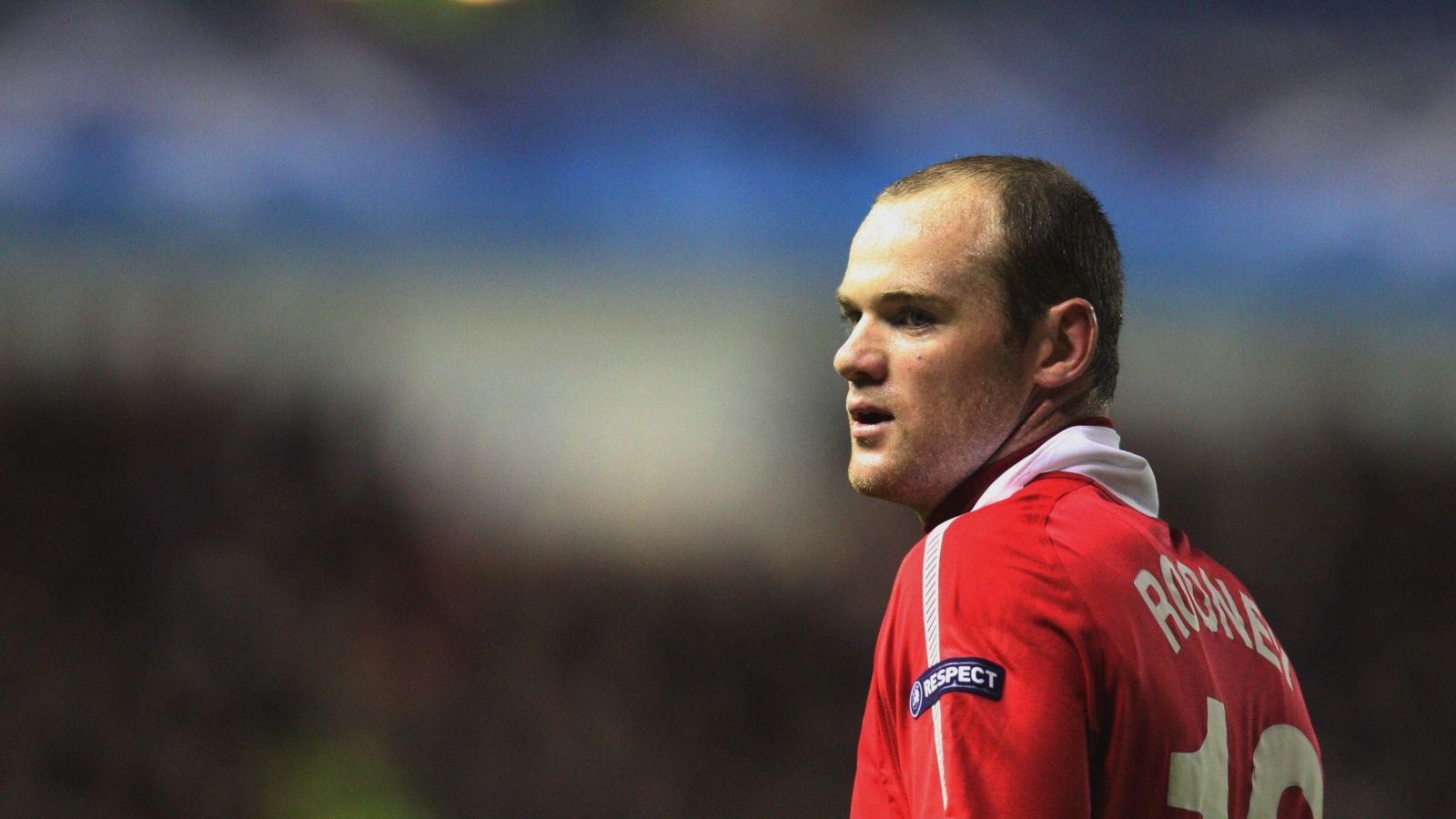
When viewed through this prism, it becomes more understandable why Wayne Rooney wanted to leave Manchester United in October 2010.
At the time, the best player in English football wanting to leave the Premier League’s dominant force felt incomprehensible and caused quite the stir.
Rooney had scored 34 goals for United in 2009-10, although he may have been licking his wounds after a pitiful World Cup for England that turned him into that summer’s Great White Nope.
United would win the league in 2011, but the direction of travel was already clear for many supporters.
This was the era where Cristiano Ronaldo and Carlos Tevez were replaced by Gabriel Obertan and hammies-made-of-cheestring Michael Owen.
United’s top target in 2009, Karim Benzema, had gone to Real Madrid and Sir Alex Ferguson declared there was ‘no value in the market’.
Money was being diverted to other causes. By 2010, around £235million had left the club in debt interest, debt repayments and fees to the Glazer family.
Essentially, after another relatively quiet summer transfer window that saw the likes of Chris Smalling, Javier Hernandez and Bebe arrive, Rooney smelt a rat.
He felt compelled to confront Ferguson about the direction of the club. As you can imagine, the United manager took that as if he’d been served a chocolate-covered urinal cake.
“You could see what was happening and then I started thinking about the team,” Rooney told the Stick to Football podcast. “Thinking, ‘Right, what’s happening with the team?’ ‘What’s going to happen with the manager because we knew he [Sir Alex Ferguson] didn’t have that long left.
“The club offered me a new five-year deal but then we just sold [Carlos] Tevez, we just sold [Cristiano] Ronaldo and I said to the manager, ‘It’s no disrespect to Phil Jones or Chris Smalling – they are obviously not going to replace Ronaldo and Tevez and I just wanted assurances that it wasn’t going to be another transition.
“I didn’t have the time personally, so I felt it was important to ask the question. Is it going to be a three, four-year transition, or is it going to be we’re going to win trophies now and he told me to get out of his office – so then I got more sense out of David Gill of what the plan was.”
Gill was United’s chief executive and had been trying to persuade Rooney to sign a new contract.
You didn’t need to be a fly on the wall to gauge how well those meetings went as the player handed in a transfer request shortly afterwards.
“During those meetings in August, I asked for assurances about the continued ability of the club to attract the top players in the world,” Rooney said in his statement.
“I met with David Gill last week and he did not give me any of the assurances I was seeking about the future squad. I then told him that I would not be signing a new contract.”
Two things were at play here. The seeds for United’s post-Ferguson demise were already sown, with elite players replaced by raw potential and semi-punts.
But, with hindsight, it was also apparent that Rooney’s career had probably peaked by late-2010.
To be more precise, he was never the same player after an ankle injury against Bayern Munich in that spring’s Champions League quarter-final and being rushed back for the return leg.
A player of his quality could mask the descent for a while – he’d score 34 goals in 2011-12 – but the trademark explosiveness was gone and he was on an irrevocable path to playing central midfield for Roy Hodgson’s England at Euro 2016.
At some level, Rooney must’ve been aware of this, even if he was unwilling to admit it to himself. He was only 24, after all. But it manifested in pushing United to maintain their on-pitch standards.
This was not immediately apparent in 2010. “We are as bemused as anyone can be, we can’t quite understand why he would want to leave,” Ferguson said in response to Rooney’s transfer request.
“I was dumbfounded. Only months before he was saying he was at the greatest club in the world.”
Chelsea, then champions and led by Carlo Ancelotti, threw their hat into the ring. Barcelona and Real Madrid watched from afar.
But it soon emerged that Manchester City wanted to sign Rooney and the player himself was open to what would’ve been the most staggering transfer of modern times.
Any sympathy amongst the fanbase terminated here, especially for those who protested outside Rooney’s Cheshire home.
Police were called after chants of ‘Join Man City and you die’, which is the most European ultra anybody has been before or since on these shores.
Another plot twist came two days later: Rooney was staying. And not just staying, but signing a five-year contract.
“I am signing a new deal in the absolute belief that the management, coaching staff, board and owners are totally committed to making sure United maintains its proud winning history – which is the reason I joined the club in the first place,” he explained.
The uncomfortable truth was that Rooney’s original instincts were bang on. Otherwise, why else would he threaten to leave again in 2013?
United were able to hide the onset of rigor mortis for as long as Ferguson remained. Thirteen years after his departure, the club is moribund and stuck in a doom loop of growing debt and dissatisfaction.
Under the Glazers and Sir Jim Ratcliffe, United are no longer shopping for the best players. Equally, those top talents are now more likely to join City, Arsenal, Chelsea or Liverpool.
Lisandro Martinez spoke out against the club’s ownership for a lack of summer investment in 2026. Rooney was publicly critical of those actions, but surely he’d have recognised where Martinez was coming from.
READ NEXT: Iconic debuts: Wayne Rooney’s gorgeous hat-trick for Man Utd vs. Fenerbahce
TRY A QUIZ: Can you name Man Utd’s top 30 goalscorers under Sir Alex Ferguson?