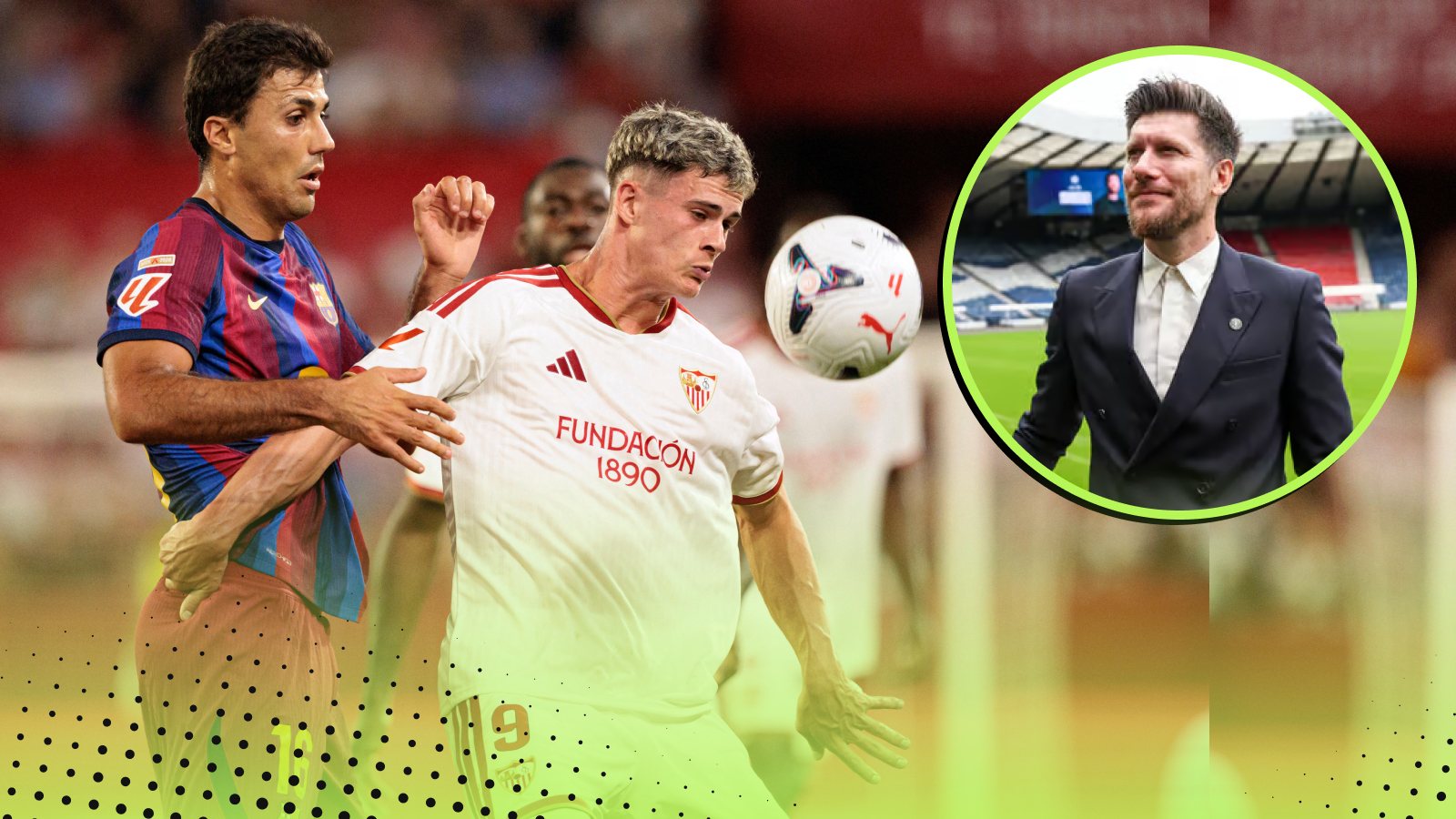
Scotland have been searching for a proper No.9 for what feels like an eternity.
There was no great tactical mystery to their problems at the 2026 World Cup. You didn’t need to spend hours hunched over WyScout to spot them.
They were outshot in their opening win over Haiti, with Angus Gunn making more saves than his opposite number. Che Adams played for 70 minutes against Morocco, but he mustered just 11 touches, seven passes and zero attempts. They actually notched over 1.00xG against Brazil, and five shots on target, but they couldn’t convert and were fortunate in the end to lose by three.
Only Panama scored fewer goals at the tournament. Scotland’s grand total of one put them alongside Saudi Arabia, Curacao and Iraq — three teams who all finished rock bottom of their groups. It felt like a clerical error that they somehow held a faint hope of squeaking through as a third-placed qualifier.
After waiting around for results that never went their way, Scotland forlornly jetted home and the football world’s attention turned to the knockout stages. Meanwhile, the Swedish Allsvenskan quietly reconvened from its summer break.
On a day dominated by Argentina and Cape Verde’s instant World Cup classic, Robbie Ure was making his own piece of history, scoring four goals for Sirius as the Allsvenskan returned to action.
It was actually the only game in a run of 10 that Sirius win. A madcap 4-4 draw with reigning champions Mjallby. Ure scored all four of their goals. The surprise title chasers had been 3-0 up and cruising before throwing two points.
The headline-stealer was a Rangers academy graduate who had previously been on Anderlecht’s books, developing with their RSCA Futures youth side, but had made just one senior appearance in Belgium.
Ure had given Sirius plenty of encouragement in his first season in Sweden. His 11 league goals represented his first real experience of men’s football, helping Sirius to a solid but fairly unremarkable midtable finish in the 2025 Allsvenskan. Nothing, on the face of it, suggested what was about to happen.
Sirius are not a powerhouse of Swedish football. They’ve spent most of their existence outside the top flight, have never won a major honour or finished in the top six, and play at a 10,000-capacity stadium dwarfed by the homes of AIK, Djurgarden and Hammarby.
Back in early April, Sirius kicked off their campaign with a 3-0 victory away to minnows Degerfors. Their front three all got on the scoresheet, Ure capping off the result in style late on.
The following week Ure scored the second goal in a 2-0 victory over Conference League regulars Hammarby. And they just kept winning. And their Scottish striker just kept scoring.
By the summer, Sirius had built up a lead at the top of the Allsvenskan table as commanding as it was unlikely. They’d matched their best-ever points tally with 14 games to spare.
Ure topped the scoring charts and was at one point top of the Europe-wide European Golden Shoe rankings – the award won most often by Lionel Messi, and more recently dominated by Erling Haaland, Harry Kane and Kylian Mbappe. Some company.
That picture was never going to last once the major leagues got underway and the usual elite goalscorers started filling their boots. Still, a little-known Glaswegian briefly sitting top of the list was fun while it lasted.
Unfortunately, Ure’s exploits in Sweden had flown sufficiently under the radar that there was never any serious conversation about him making Steve Clarke’s World Cup squad. At least, not from anyone whose opinion carried any weight.
There was one Twitter Tactico who had clearly been paying attention. Fair play to him. He’d spotted what most hadn’t.
“One name that stands out is Robbie Ure, currently playing for Sirius in the Allsvenskan,” wrote Roger Bonet back in June.
“He offers exactly that profile and provides qualities Scotland currently lack. Although he’s still young, he has the potential to become Scotland’s future number nine.”
While Ure wasn’t getting anywhere near Scotland’s World Cup squad, he was getting scouted by high-level European clubs.
There was a bittersweet element to Ure’s August departure, coming before the run-in of Sirius’ fairytale title charge. But the opportunity to play in La Liga for a club the size of Sevilla was impossible to pass up. Sirius pocketed €6.5million, comfortably smashing their club-record transfer fee for a sale.
It’s a relatively modest fee by European standards, but this was no punt by Sevilla. Ure isn’t merely filling out the squad. They’ve put genuine faith in him, throwing him straight into the XI and handing him starts in four of their seven games so far — including against Atletico Madrid and Barcelona.
Ure has an assist to his name, having set up Sevilla’s consolation in a 3-1 defeat to Atletico, but he’s yet to find the net himself in Spain. He doesn’t appear overly concerned, taking a healthy and measured view of his adaptation.
“No, I think it can be normal when you move from one league to another,” he told .
“La Liga is obviously a big step up, and when you have a different culture every day, when you have new teammates and you have to build relationships, I just need to work hard.
“I need to keep working hard in training and keep trying to get on the pitch and try to impress the coach. I’m sure the goals will come with time. But yes, I’m adapting to everything, including the heat, of course. So yes, I’m just trying to enjoy it as much as I can and be patient.
“Everything is new right now, and I’m sure I’ll get there.”
Those aren’t empty words. Ure was widely praised for his display against Barcelona, with Sevilla taking an early lead and arguably giving Europe’s most fearsome and free-scoring team their toughest test of the season.
“He’s devoured Christensen and stretches Sevilla’s play so much with his movements.”
The goals may not have arrived yet, but Ure’s long-awaited first international call-up is richly deserved.
Clarke had already recognised that his time was probably up and that Scotland needed a fresh face with fresh ideas.
Enter Ure, who now has the chance to spearhead a new era under Sebastien Pocognoli.
READ NEXT: How Monchi built a stunning Sevilla side that fell just short of a quadruple
TRY A QUIZ: Can you name every team Scotland have played at the World Cup or Euros?