t's probably not a coincidence, what with Fifa's presidential election getting closer all the time, but Gianni Infantino has been sweeping through Asian member associations. There he was attending a ceremony in Macau to inaugurate new headquarters, signing an agreement in Mongolia to build a new national stadium and in Uzbekistan to open a Fifa Arena mini-pitch. All wise moves as Asia is still divided when it comes to the battle for the biggest job in world football. A number of associations have expressed support for the incumbent; others have openly opposed him; some will decide upon seeing the other candidate; some will follow the lead of the Asian Football Confederation (AFC) leadership and vote against Infantino; others will just wait.
The culmination of Infantino's trip were the two finals of the inaugural Fifa Asean Cup, a new tournament for south-east Asia and a few invited guests. In Saturday's final of the Asean Challenge Cup, the second-tier event held in Hong Kong, Infantino was greeted with chants of "Fifa Mafia", but 48 hours later in Indonesia for the main event the reception for the 56-year-old was a little warmer. Jakarta is already onside and did Infantino a huge favour by winning a tournament that was very much his brainchild.
Six nations fought for the Challenge Cup, with Hong Kong beating Cambodia 2-0 in the final. Meanwhile Indonesia defeated Thailand in the final of the eight-team Asean Cup in a penalty shootout, much to the delight of 70,000 fans in Jakarta. It was a smart move from Fifa to give Indonesia hosting rights of a new tournament that was in danger of being unnecessary, unwanted and almost unnoticed. Indonesia were hungry for success after never being champions of south-east Asia.
While the Asean Cup is new, the region has had a longstanding biennial competition – currently known as the Hyundai Asean Cup – since 1996 and the final of the 16th edition was won by Vietnam in August. This meant that few thought there was any need for another competition. Infantino was different. Last October, he arrived in Kuala Lumpur at a regional Asean meeting and announced a new tournament for the region. A few minutes after the speech, Fifa's media office was sending out what looked to be hastily put together emails to promise that details would follow. The AFC was less than impressed at the world body coming into its back yard and announcing new tournaments.
Information was hard to come by. Then there were invitations for China and India to participate, a blatant if understandable attempt to capture some of 2.8 billion potential viewers. In the end, both declined. India preferred to face Brazil, Panama and Uruguay in glamorous friendlies, while China ended up losing 5-0 to Palestine on home soil. Broadcasters didn't seem too enthusiastic either, and it took time for most of the region to sign up, with Thailand failing to do so as fans there watched the final on Fifa channels.
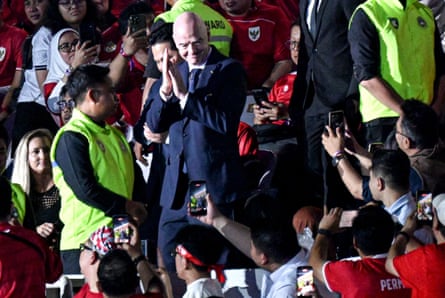
The main advantage this new tournament had was timing given it took place during the international window. With more and more players from the region playing in Europe, it meant all competing nations could field their strongest teams, especially Indonesia, though they still only won their four-team group by the finest and most dramatic of margins.
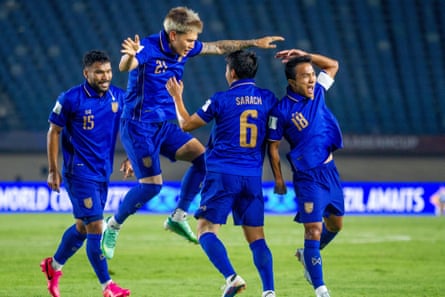
Going into the last match, the hosts had to beat Bangladesh (India's replacement) by one goal more than Malaysia beat Singapore to reach the final. Malaysia won 6-0 and heading into added time, Indonesia were 7-2 up against Bangladesh with only two extra minutes signalled. That was almost certainly an error, given the previous goals and VAR reviews, and Indonesia scored in the 96th and 97th minutes to win 9-2 and squeeze through. The other group, hosted in the city of Bandung about 70 miles south-east of Jakarta, was not quite so exciting, with Thailand taking first place with a match to spare.
Attendance figures were not released but empty seats were the defining image of many games. The final, though, was memorable, ending 2-2 after 120 minutes of action, with Indonesia taking the shootout 4-2. In this battle of English coaches, John Herdman triumphed over Anthony Hudson.
Whether that means Indonesia are champions ofsouth-east Asia given Vietnam's summer success probably depends on who you ask. For most outside Indonesia, it could all be forgotten quite quickly. Infantino, perhaps delighted at seeing his proclamation of 12 months ago being played out on the pitch, may well judge the real success of it all on whether he has increased his chances of staying in his position. That remains to be seen. If so, we may see both Infantino and the Asean Cup in south-east Asia again. If not, then the tournament is likely to go the same way as its creator.