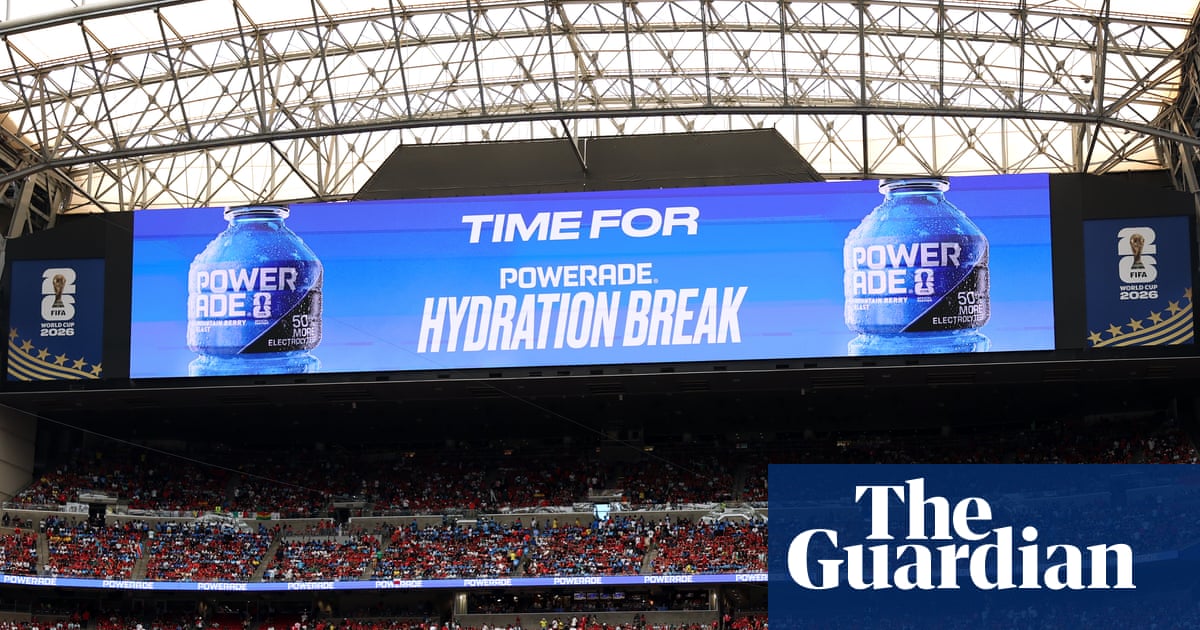
Fifa's tender documents for TV rights for the 2030 World Cup includes a provision for broadcasters to sell adverts during hydration breaks in a strong indication the controversial stoppages will be retained.
A three-minute break midway through each half was introduced for the first time at all 104 matches at last summer's World Cup in the interests of player welfare, a radical move that also provided a commercial boon for broadcasters, particularly the rights holders in the United States, Fox Sports and Telemundo.
Fifa insists it has yet to decide whether hydration breaks will be used at the 2030 tournament, which will take place largely in Morocco, Spain and Portugal but will also feature three matches in South America, but the Guardian has learned that the possibility and potential commercial benefits are flagged to broadcasters in the tender documents.
The global governing body has awarded World Cup rights to Netflix in Spain and to the public service broadcaster SBS in Australia, and the sales process for the US and Puerto Rico is continuing, with Thursday the deadline to bid.
The tender documents are also understood to reference cooling breaks, a welfare mechanism used by Uefa whereby play is stopped for between 90 seconds and three minutes if the on-field temperature reaches 28C.
Fifa sources told the Guardian the tenders were designed to cover all potential options.
It used cooling breaks on an ad hoc basis before triggering the wholesale adoption of hydration breaks for the 2026 World Cup, despite 31 of the 104 games being played in climate-controlled stadiums, after high temperatures led to stoppages in about 60% of matches at the 2025 Club World Cup in the US.
Fifa said the move was to protect the integrity of the World Cup by ensuring all matches were played in the same conditions, although there were also major commercial benefits for broadcasters.
The Hollywood Reporter reported last summer that hydration breaks were generating between $2m and $9m in advertising revenue a game, leading to claims that Fox brought in an estimated $250m.
Fifa did not benefit financially last summer but the anticipation of hydration breaks being included could drive up prices for 2030. The US rights are expected to fetch between $1.5bn and $2bn (£1.14bn-£1.52bn) in an auction that will feature bids from Netflix and all of the streaming services alongside traditional broadcasters.
Fifa declined to comment.
Mandatory hydration breaks will not be used at next year's Women's World Cup in Brazil, where temperatures are forecast to be cooler than they were in many cities at last year's men's tournament.