"England have gone backwards over the last eight to 10 years." Damning words about the state of English rugby league, from an Australia head coach, no less. But what should be most troubling for anyone with any sort of power within the sport is that these comments are not recent: they were made by the then Kangaroos coach Ricky Stuart, almost two decades ago.
Stuart was speaking after England's men were beaten in the semi-finals of the 2008 Rugby League World Cup but, as the national team head home from the tournament once again, his stance still holds weight today. England have failed to make it to the last four for the first time, having failed to qualify from a farcical group-stage format.
But to point the blame solely at the format, or even the players and staff involved, would be missing the point entirely. English rugby league has been allowed to coast internationally for years, knowing the only real threat was from Australia and New Zealand and if they lost against either of those sides, well, that's fair enough given the money and power the National Rugby League possesses.
Things are different these days, though. Samoa and Tonga have risen as new powerhouses in the world game; it is not inconceivable to suggest they could contest next weekend's final. England are now the fifth-best nation in the world and they risk drifting further. English rugby league is in dire need of systemic change, with the early exit the clearest warning sign yet.
The Rugby Football League has paid lip service to the humiliation by opening an inquest. If there is one thing at which English rugby league remains best in class, it is a review: the postmortem of 2008 determined things actually weren't that bad, while a detailed "strategic review" last year was nothing more than a disguise to increase Super League to 14 teams.
Here lies the deep-rooted problem for English rugby league. You had to get as low as point 131 in that review to find the first mention of international rugby league and a plan for the England team – below pressing points including, but not limited to, creating a nines event and once again needlessly tweaking the Challenge Cup format. Priorities.
That strategic review is a metaphor for how those in charge of the sport – the governing body and the clubs, given how the latter hold most of the power still – view the England team as a priority. Spoiler: it is very low. And in a world where the best are getting better and England's best players are treated as an afterthought, what do we reasonably expect will happen come 2030?
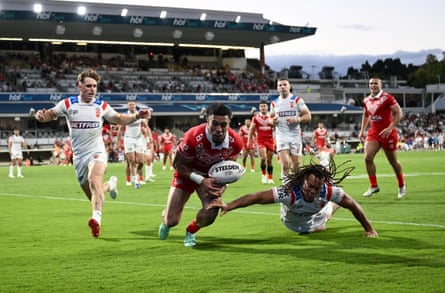
Picture the reaction in any other sport where the England team prepared for a World Cup without a single warm-up match, a mid-season Test or even a solitary training camp; where the players and staff met each other in person for the first time days before their first match. The Football Association, the England and Wales Cricket Board or the Rugby Football Union would rightly be ridiculed: the RFL and those responsible must now face the same scrutiny.
This is not an easy fix for multiple reasons. As mentioned, the RFL does not hold all the power in this particular scenario; the clubs have ultimate decision-making authority and, in the past year alone, have executed decisions which will set the England programme back further. Expanding Super League to 14 teams – 15 next year when London come up – diminishes the quality on show.
The best players from Australia and New Zealand have regular exposure to elite-quality rugby league in the NRL every week. Super League's standard has gone down. Then there was the outrageous decision to increase the overseas quota from seven to 10 per club. It was a decision made last year out of greed and a desire to fulfil an agenda to expand to 14, to boost the player pool to make 14 teams a viable possibility. It will have a devastating impact.
On any given weekend in Super League there will be 238 players on the field. As many as 140 of those can now be overseas and when you take out the significant French contingent too, you have a scenario where fewer than 25% of players in Super League could be England‑eligible. Fewer opportunities for English players at the expense of overseas talent. How do we realistically think this is going to pan out long term?
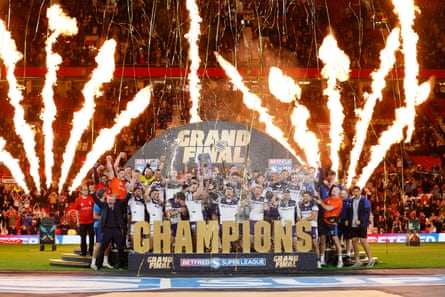
What is the immediate fix? An independent commission led by the NRL that takes the power away from the clubs. Critics will say the NRL is hardly a great advocate for the growth of international rugby league, but it would at least be able to ensure clubs are no longer making decisions for their own personal gain which hinder the national team's prospects.
Until that changes, the decline of the national team will deepen. Shorten the Super League calendar, reduce the size of the elite competition and give England's best talent regular opportunities to play together and progress. Is it too much to ask to put the England national team higher up on the sport's priority list?
The emergence of Samoa and Tonga feels bad for English rugby league in this precise moment. But it should act as a catalyst for those in charge to wake up and realise that the game cannot coast any longer.