The Jillaroos survived an almighty scare from Fiji in the World Cup semi-final, securing a place in the tournament decider against New Zealand at Lang Park next week despite a stunning resistance from the brilliant Bulikula.
Driven by the exquisite, unpredictable playmaker Luisa Yaranamua – 23 and yet to play an NRLW match – and supported by powerful, committed teammates, Fiji led for much of the first half and were level with the Jillaroos at half-time.
It took a quadruple from Australian winger Abbi Church – including a spectacular put-down from a Tarryn Aiken kick and a late runaway – in a more composed second half performance from the Jillaroos to settle the contest. Yet they go into next week's final with an injury concern over their other winger Jaime Chapman, who was taken off with a quad injury after scoring.
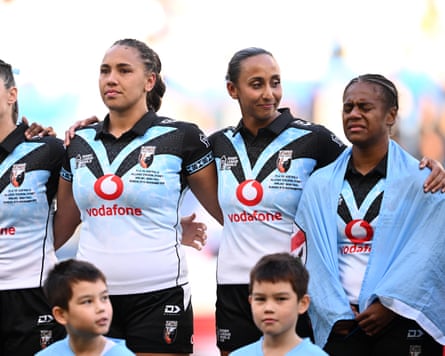
While the defeat will hurt the inspired Fijians, who had tears running down their faces during their anthem and delivered a passionate pre-match hymn, their first women's World Cup will not be forgotten. Their valiant effort against Australia, and another narrow loss to the Kiwi Ferns earlier in the tournament, have proved international women's rugby league is alive despite the dominance of the Jillaroos.
With Wests Tigers' Losana Lutu at halfback, Cronulla's Cassie Staples at No 1 and Canberra hooker Sereana Naitokatoka leading the side, the Fijians knew their opponents well. The same could not be said for the Jillaroos and the Fiji No 6 Yaranamua, who plays in the second tier in Sydney for South Sydney. Her shoulder off the ball rattled Tiana Penitani Gray early on and proved a statement for her team's intent.
The Jillaroos almost found themselves behind within the first three minutes when a Yaranamua kick forced Church into an error. From the subsequent set, Bulikula backrower Talei Holmes appeared certain to score but was spun and held up by Jillaroos' centre Jess Sergis.
The first ten minutes were all Fiji's, and their dominance was rewarded with a penalty goal by Yaranamua after an illegal strip. They were not done. A strip by Naitokatoka on Jaime Chapman gave her side the ball on the Australian line, and the cunning Yaranamua feigned a delay at dummy half to split the markers and overpowered her opposite number Jocelyn Kelleher one–on-one on the line.
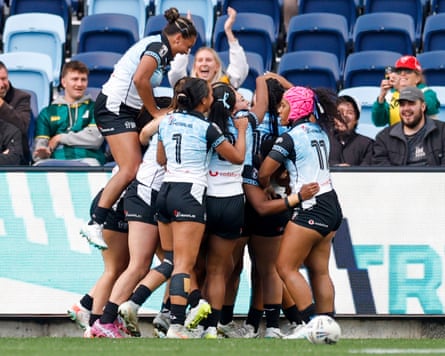
This was already the first time Australia had not scored first in a World Cup match since the 2013 final. But with the score 8-0 after 20 minutes, this afternoon threatened to deliver the greatest upset in women's rugby league history. The Bulikula were dominating in the ruck, and Fiji prop Lorren Ieli delivered another crushing tackle on substitute Keilee Joseph, then backed it with another marauding run.
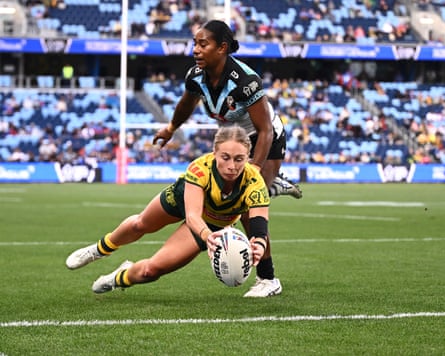
The Fijians were almost in again, until Church snatched the ball back from another Yaranamua kick just in time. And it was the Australian No 5 who finally ended the remarkable Fijian resistance, crossing in the corner after a simple spread right following a needless ruck penalty by the Bulikula. Minutes later, Church was not needed after Tamika Upton slid through herself to level the scores.
Though Fiji were playing in their first women's World Cup, this performance should not have been a surprise. The Bulikula also proved they were a match for the Kiwi Ferns in the first match, when they led 12-10 at half-time. That match hung in the balance until a late New Zealand try quelled the Fijian uprising.
This time around, the Fijians could not keep up with the imperious opponents, and found themselves behind soon after the break. The Australians were cleaner in possession and Aiken began to take control. The final score might appear one-sided, but this was - in truth - a milestone match for the international women's game, highlighting the depth building in the NRLW, not unlike the rise of Tonga and Samoa in the men's competition. Maria Paseka's late try for Fiji, created by a Yaranamua blindside raid, might have been a consolation but it was no less than the upstarts deserved.
Yet next week's final is still a throwback: the fifth final in a row between Australia and New Zealand. The last time the Jillaroos lost a match was more than three years ago, when the Kiwi Ferns edged them in Melbourne 12-6. New Zealand, however, can take inspiration from the impressive Bulikula who showed the hosts are not invincible.